Die grausame Wilderei in Ithumba

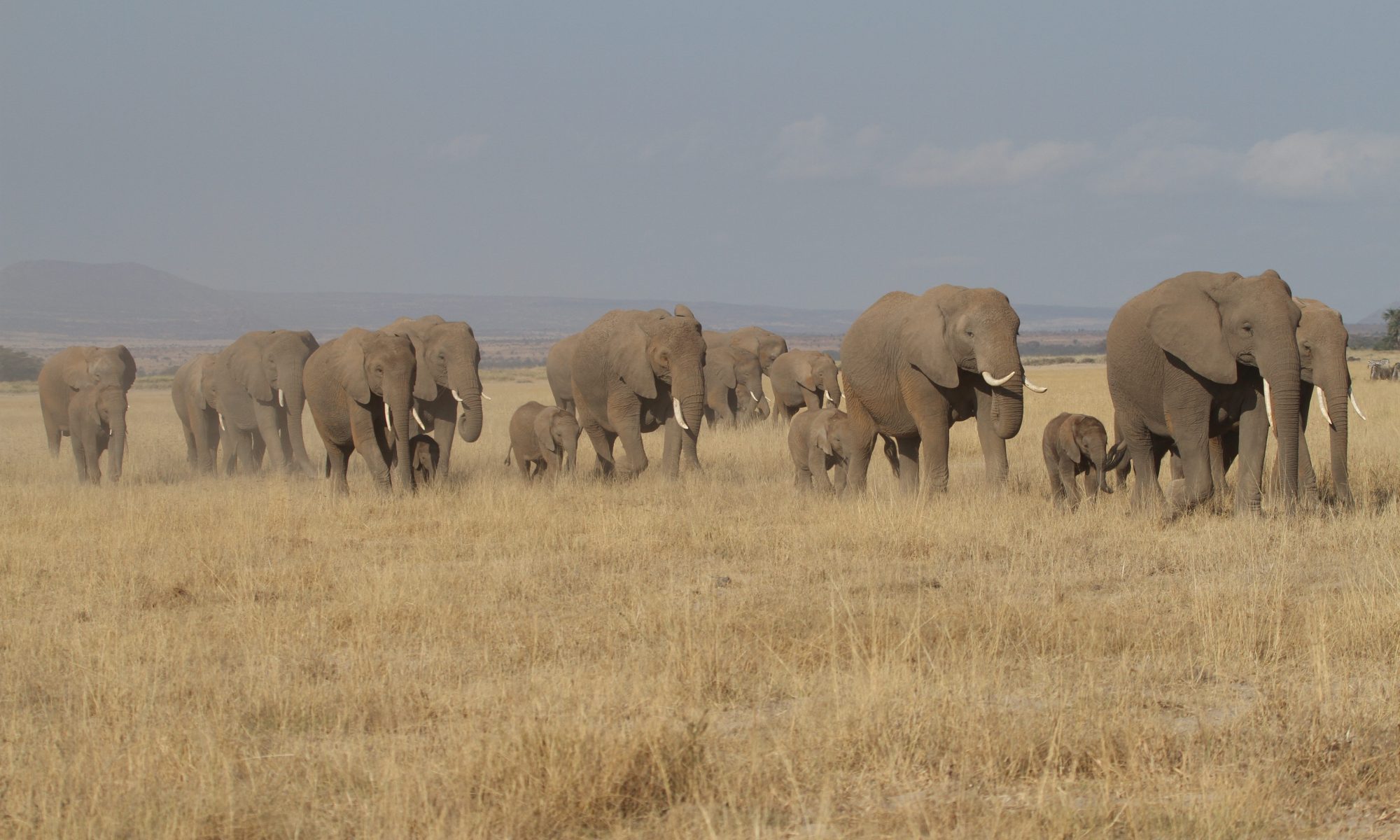
Als es im Laufe der Trockenzeit immer dürrer wurde und die regenwassergefüllten Wasserlöcher austrockneten, kamen wieder mehr wilde Elefanten wie auch unsere Ex-Waisen täglich zu den Wassertränken sowohl am Schlammloch als auch bei den Ithumba Stallungen. Die Elfenbeinwilderei ist in den letzten Wochen eskaliert, nicht nur in Tsavo, sondern in ganz Kenia. Die Wilderer-Banden schienen darauf aus zu sein, soviel Elfenbein wie möglich zu rauben, bevor die neuen, härteren Strafen für Wilderei in Kraft treten. Diese Strafen waren in letzter Zeit Gegenstand vieler Pressemitteilungen.

Wilde Bullen besuchen die WaisenDie wilden Bullen bei den Stallungen

„Die grausame Wilderei in Ithumba“ weiterlesen

Brutale Wilderer weiter auf dem Vormarsch: Rettet die Elefanten Afrikas!!!

Artenschützer schlagen Alarm:

2011 war das schlimmste Jahr für die Elefanten seit zwei Jahrzehnten; allein in zwei Wochen wurden über 3000 Stoßzähne konfisziert. Unschwer, sich auszumalen, welche traurige Jahresbilanz daraus folgt. In Zentralafrika gelten die Populationen bereits als extrem gefährdet, in Kamerun beispielsweise wurden innerhalb weniger Wochen hunderte von Elefanten niedergemetzelt. Auch in Ostafrika, vor allem in Kenia, hat die Wilderei neue Rekordhöhen erreicht.

[000200]klein

Damit ist das Überleben des größten Landsäugetieres der Erde in Afrika weiterhin massiv bedroht: In den 80er Jahren verlor der Kontinent die Hälfte seiner Elefanten – mehr als 600 000 Tiere. Sie mussten ihr Leben lassen, weil die Gier nach dem „weißen Gold“ nicht zu stoppen war. Allein Kenia verlor damals 85 Prozent seiner Elefantenherden.

Inzwischen hat sich die Zahl der Afrikanischen Elefanten auf weniger als 500 000 verringert. Deshalb nochmals unser Appell an alle ElefantenfreundInnen und an alle Menschen, denen das Fortbestehen der Natur, der Vielfalt der Arten ein Anliegen ist: So weit darf es nicht wieder kommen.

„Brutale Wilderer weiter auf dem Vormarsch: Rettet die Elefanten Afrikas!!!“ weiterlesen

Zimbabwe: Rangers Kill Two Poachers

PARKS rangers have shot and killed two poachers in Chaizarira National Park in Binga during a shoot out.

The rangers recovered three Lee-Enfield rifles, 76 rounds of 303 ammunition, one pair of elephant tusks and some fresh elephant meat. Some of the poachers fled. The bodies of the unidentified poachers, suspected to have come from the Sinamuchembo communal lands in neighbouring Gokwe, have since been taken to the mortuary at Binga Hospital. Parks public relations manager, Ms Caroline Washaya-Moyo, last week gave details of the battle.

"A ranger manning the entrance to the park heard two gun shots about 8km to the eastern side of the gate around 4pm and reported to the main office. Our rangers tracked the poachers and had gun contact with them at night, resulting in the death of two poachers and recovery of the guns and ammunition. "Parks is strongly warning poachers and would-be poachers that the authority has taken a zero tolerance attitude towards poaching. We stress that anyone who dares cross into parks territory for the purposes of poaching should be warned that the consequences can be fatal," she said.

Only one elephant has been killed and the authority is still searching the area.


Source: http://allafrica.com/stories/201104111167.html

Tanzania: Bush Meat Hunting ‚Threat to Wildlife, Forests‘

Experts have warned on several occasions that conservation activities in Tanzania are seriously impaired by shortage of funding, which consequently expose the country’s fantastic forests and wildlife– especially rare species– to imminent threats of extinction.

The funding shortfall is undermining protection of the ecology and biodiversity, which are threatened by and left vulnerable to illegal human activities, such as poaching, logging and farming.

But a recent report shows that in some areas, conservation efforts are derailed by widespread hunting for bush meat, in addition to other human encroachment activities. To address the situation, the experts want to see more investment in conservation, to help the government recruit and train more personnel and partner with local communities in the management of natural resources.

"Tanzania is hugely under-resourced for conservation tasks; this is a major problem," says Mr Trevor Jones of the Udzungwa Elephant Project, who cautions that the country is facing increasing difficulties to conserve its remaining fantastic natural riches.

But his comments come in the wake of a new report released early this month, which warns that "the populations of several animal species in southern Tanzanian forests are suffering alarming declines due to bush meat hunting and habitat degradation".

The report, prepared by Tanzanian and international scientists and conservation organisations, describes the results of three separate research projects focused on the threats to biodiversity in Uzungwa Scarp Forest Reserve in southern Tanzania since 2004. It shows that Tanzania’s wildlife has been hugely impacted by human activities and recommends that action be taken urgently to protect it. Also affected is the biodiversity critical to the health of the ecosystems which many Tanzanians rely on for water, soil fertility and other services.

"Tanzania has an amazing conservation record, but the increase in human population, and other external pressures such as the increased demand for ivory and other animal products from China, means it will get harder and harder for the country to conserve the incredible natural riches it still has," Mr Jones, a biologist in the team which compiled the report, further noted.

Another member of the team, Sokoine University lecturer Amani Kitegile, says bush meat hunting is also becoming a serious threat to wildlife in Tanzania. He told The Citizen on Saturday that apart from fire, hunting is an immediate threat to wildlife populations and a major conservation problem for the Uzungwa Scarp Forest Reserve.

The fires and bush meat hunting aside, other human activities like pole cutting and illegal logging have also exacerbated the problem, as they lead to further deforestation and soil degradation. According to Mr Kitegile, the government needs to revisit its policies and approaches towards conservation issues to tackle the problem holistically.

"Increased law enforcement will have some immediate effect at decreasing human pressure on the forest. But the costs will be high if other options are not considered; and these include providing alternative sources of protein (meat) and income and some level of assurance that the preservation measures will benefit local people in the long term," he noted.

Tanzania’s national website shows that the contribution of forestry sector to the country’s gross domestic product is estimated to be eight to 10 per cent.

A press release on the report quotes Udzungwa Ecological Monitoring Centre coordinator Arafat Mtui saying that the study results dramatically show that some species in the area were on the brink of extinction from one of their last remaining strongholds. Among the most affected species is the Udzungwa red colobus, a monkey found only in these mountains and nowhere else in the world.

The report also found that duikers, small antelopes, are too in danger of vanishing from the forest due to hunting, and the Angolan colobus, another monkey found in the area, may have already disappeared from parts of the forest. Historically, the authors of the report argue, hunting and other human impacts have long taken a toll in the forest – wiping out large animals as elephants and buffalos.

"The Udzungwa Mountains are the pearl of the Eastern Arc Mountains because they contain the largest forests and have extraordinary numbers of plant and animal species found nowhere else on earth, including two species of monkeys," stated Dr Francesco Rovero of Italy’s Trento Museum of Natural Sciences, who led the preparation of the report.

He added: "Unfortunately, while some of the forests are protected by the Udzungwa Mountains National Park, there are important forests such as Uzungwa Scarp Forest Reserve that have not been granted adequate protection."

The researchers have recommended immediate steps to be taken to halt the decline of the forest’s rare species, including stepping-up law enforcement efforts and forest patrols; providing opportunities for local communities to get involved in managing the forest; and environmental education for locals. The researchers further recommended that the government should upgrade the area’s protected status to ‚Nature Reserve‘.

"The government needs to allocate the resources that are required to manage this national treasure and to address the needs of the adjacent communities," Mr Charles Meshack, the executive director of the Tanzania Forest Conservation Group, noted in the statement.

A biological hotspot, the Eastern Arc Mountains are home to some 100 unique animal species and 850 unique plants. In a recent list prepared by Conservation International (CI), Africa’s mountain forests, including the Eastern Arc, were listed in the world’s top 10 most threatened forests.

Source: http://allafrica.com/stories/201102210290.html
Cameroon fights against poaching

Walter Wilson Nana, AfricaNews reporter in Buea, Cameroon

Twenty elephant tusks were seized aboard a truck in Ntam, a village located in the East Region of Cameroon, on the border with the Republic of Congo. The tusks were hidden in the rear chest of the 30-ton truck that was transporting some 300 bags of cocoa from Sembe in Congo-Brazzaville to Cameroon’s economic capital, Douala.

Elephant tusk

Five people have been arrested including the driver of the truck. They have been taken to Abong Mbang, a town in the East Region of Cameroon where it is expected poaching-related charges will be pressed against them. If found guilty, the suspect poachers might be slammed jail terms ranging from 1 to 3 years and a fine ranging between FCFA 3,000,000 (US$ 6000) to FCFA 10,000,000, (US$ 20000) according to Cameroonian law.
According to Jacque Guillaume Touck Kamba, the game ranger manning the forestry and wildlife control post in Ntam, they discovered upon initial search, a small ivory tusk weighing less than 5kg concealed in a brief case in the driver compartment of the truck. “We began suspecting something was amiss. We systematically searched the entire truck and discovered 20 ivory tusks tucked in a chest at the rear of the truck,“ Guillaume explained.
The ivory tusks had been split into 30 pieces so they could conveniently fit in the chest. “10 of the tusks weigh less than 5kg, while the other 10 weigh more than 5kg,“ disclosed Touck Kamba. Going by the number of tusks, 10 elephants have been killed. Rangers suspect the elephants were poached in Nki National Park, located in the East Region of Cameroon, the tusks assembled in Souanke, a border town in Congo-Brazzaville and owners attempted to later smuggle them through the East and South Regions of Cameroon to Douala.
This seizure brings once more to the fore the intensity of ivory trafficking in the Southeast of Cameroon and the increasing difficulties faced by Cameroon’s Ministry of Forestry and Wildlife, MINFOF, to wade off the killing. “Just a week before this seizure we, upon a tip off, missed by whisker poachers said to have been smuggling six ivory tusks extracted from elephants killed in Nki,“ said Desiré Mpae, a game ranger working for Nki. “The poachers probably learnt of our arrival and escaped across the border to Souanke in Congo-Brazzaville,“ said Mpae.
According to Fidelis Pegue Manga, Communication Officer for the Worldwide Fund for Nature, WWF, Njengi Office in Yokadouma, the East Region of Cameroon, earlier in December 2010, game rangers at Ntam control post pursued and seized two ivory tusks from a fleeing poacher.

Difficulties
Problems bedevilling anti-poaching efforts around Nki National park are enormous. “There are just 30 poorly equipped game rangers to protect a forest massif spanning more than 300,000 hectares,“ explained Expedit Fouda, WWF Park Assistant for Nki. “Most of the poachers are armed with automatic rifles whereas you have as many as 10 game rangers to one old Mass 36 gun, which is not capable of dissuading these illegal hunters,“ Fouda added. Rangers also complain of the numerous unprotected trails that lead to the heart of the park and decry the decline of anti-poaching support.
Nki forms part of TRIDOM (Tri-National Dja-Odzala-Minkebe) that respectively comprise protected areas in Cameroon, Congo-Brazzaville and Gabon. However, TRIDOM activities have been slow to take off even though Ministers in charge of Forestry and Wildlife of the aforementioned countries had earlier signed the TRIDOM accord. “The delay in launching TRIDOM activities is playing negatively against our effort. This, coupled with dwindling funding for conservation, has made it hard for us to sustain effort to fight ivory traffickers“ stated Mboh Dandjouma, Conservator for Nki National Park.

Posted on Friday 4 March 2011 – 12:00


Source: www.africanews.com/site/Cameroon_fights_against_poaching/list_messages/37626