Amboseli, Kenya: where elephants have the right of way After 40 years, Richard Madden returns to the Amboseli and is inspired by an improved balance between man and animal

By Richard Madden 5:52PM GMT 01 Feb 2011

It is September 1972. A 15-year-old English schoolboy gazes wide-eyed over the lush savannah lands of Kenya’s Amboseli Reserve. This is his first trip abroad, to visit an elder brother working in Africa. Large herds of zebra, wildebeest and buffalo are moving peacefully through a landscape of acacia bushes and elephant grass as giraffe feed daintily on the elegant, outstretched branches of fever trees. In the background, hovering above a halo of cloud, Kilimanjaro’s cone is lavishly laden with snow. „Amboseli, Kenya: where elephants have the right of way After 40 years, Richard Madden returns to the Amboseli and is inspired by an improved balance between man and animal“ weiterlesen

Zimbabwe ivory stockpile shoots up

Zimbabwe’s ivory stockpile has rocketed to 42,000 kilos up from a previous record of 29,000, but the country cannot sell it due to a ban, state media reported on Sunday.

Photograph by: Reuben Goldberg

„At the moment there is a nine-year moratorium on the international sale of ivory from Zimbabwe, it will end in 2016,“ Romana Nyahwa, acting director for Zimbabwe National Parks and Wildlife told the Sunday Mail newspaper. „Zimbabwe ivory stockpile shoots up“ weiterlesen

Zimbabwe: Polish hunter sues after failing to bag elephant

A Polish businessman is suing a travel agency after he failed to find elephants to shoot whilst hunting in Zimbabwe.

image
Waldemar I. (name withheld under Polish law) from Bytow in the Pomerania region in northern Poland, had long dreamt of hunting elephants in the African bush.
In a bid to fulfil his fantasy, he enlisted the help of hunting specialists Jaworski Jagreisen, a German-based firm that also organises trips in pursuit of Polish bison.
The company organised a trip for Waldemar I. to Zimbabwe, and the huntsman was picked up in Harare by staff from the Mopani Safaris company. However, the adventure was not to be a success.
“They took me to a terrain where there simply weren’t any elephants,“ he told the Rzeczpospolita daily.
“The bagging of trophies was simply out of the question.“
The head of Jaworski Jagreisen was in court in Poznan on Tuesday, where he argued that “the terrain is difficult and hilly, but elephants are present.“
“From what I know, Waldemar I. would have seen their dung,“ he added.
The case has been adjourned until 15 February. The plaintiff is hoping to secure 32,000 zl (8,000 euros) from the company to cover his safari costs. (nh)


Source: www.thenews.pl/national/artykul148617_polish-hunter-sues-after-failing-to-bag-elephant.html

A nation of tragedies: the unseen elephant wars of Chad

Chad’s few remaining elephants are "survivors of a ‚holocaust’".
[warning: graphic images of killed elephants]

Stephanie Vergniault, head of SOS Elephants in Chad, says she has seen more beheaded corpses of elephants in her life than living animals.
In the central African nation, against the backdrop of a vast human tragedy—poverty, hunger, violence, and hundreds of thousands of refugees—elephants are quietly vanishing at an astounding rate. One-by-one they fall to well-organized, well-funded, and heavily-armed poaching militias. Soon Stephanie Vergniault believes there may be no elephants left.
A lawyer, screenwriter, and conservationist, Vergniault is a true Renaissance-woman. She first came to Chad to work with the government on electoral assistance, but in 2009 after seeing the dire situation of the nation’s elephants she created SOS Elephants, an organization determined to save these animals from local extinction. As a writer Vergniault is also working on a screenplay related to the ivory trade in Chad and elsewhere in Africa.
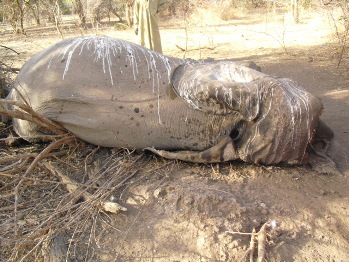

Poached elephant: poachers cut off the trunk and sometimes the head to get at the ivory tusks. Photo courtesy of Stephanie Vergniault.

"The population of Chadian elephants was around 20,000 in the 1980s, but due to the intensive poaching, it was reduced to a little more than 3,000 today," Vergniault recently told mongabay.com, illustrating a total decline of 85 percent in less than three decades. And that number keeps falling: 105 elephants were killed by poaching in the region of Logon Oriental during the month of April alone. According to Vergniault if poaching continues at this rate not a single elephant will be alive in Chad in three years time.
SOS Elephants is working desperately to establish ways to stop poaching in Chad, yet they face off against poachers who are highly-trained and well-compensated soldiers-of-fortune with access to sophisticated technology, not simple locals driven to kill elephants out of desperate poverty.
"I doubt [the poachers] are living in Chad," Vergniault says. "They have a kind of Arabic nomadic style: traveling by horses divided into small groups of 5, sometimes with camels to carry the ivory. They are apparently former soldiers, since they are very well trained when shooting."
Vergniault says that she believes the poachers have their main base in the Central African Republic, and are likely operating both in Chad and Cameroon. These poachers are also equipped with the latest in technological advances, including GPS and satellite phones. They may even be employing satellite imagery to locate and follow elephant herds.
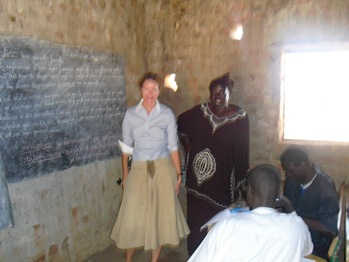

Vergniault works with locals. Photo courtesy of Stephanie Vergniault.

"Due to certain sources that I cannot for the moment reveal, we are really wondering if they are not using satellite pictures to localize the groups of elephants," Vergniault explains. "It is very important for us to understand how the traffic is organized abroad and if the ‚guys‘ behind the traffic have very sophisticated ways to operate and are able guide the poachers due to very high satellite picture, perhaps even military quality?"
Who is ultimately organizing and paying these militia-poachers no one knows. However, the ivory does not stay in Africa, but most likely ends up in far-away China, a nation known for a rich market of illegal wildlife goods.
The only way for SOS Elephants to even begin combating such determined poaching is by working closely with locals and the Chadian government.
"We are slowly establishing a very good network of local informers who have been taught by us to give us the position of poachers or elephants. Due to our very good relationships with the Chadian authorities, we are alerting the Mobile Forces of Protection of the Environment and sometimes even the Head of State to ask him to send troops whenever it is necessary," Vergniault says, adding that the Head of State of Chad, Idriss Deby Itno, has become a heroic ally in the war to save the nation’s elephants.
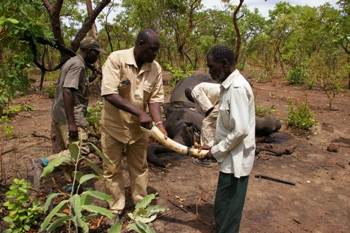

Officials seize ivory with killed elephant in the background. Photo courtesy of Stephanie Vergniault.

The government, Vergniault stresses, has been incredibly helpful. In fact, it’s not only elephants that are losing their lives to poachers‘ ammunition, but Chadian soldiers as well. Last month poachers killed two Chadian soldiers in a single weekend. The elephant wars are a human tragedy just as much as a wildlife one.
Along those lines, SOS Elephants is not content to only work on the poaching issue, but is also helping locals protect their fields from hungry elephant.
"Because we need to enhance the quality of the relationships between elephants and farmers, our second kind of activities is to teach the people how to better protect their crops," says Vergniault, who has worked with farmers to employ red pepper as elephant-repellent, including planting red pepper around their fields.
Historically, Chad’s elephants have migrated both to Cameroon and the Central African Republic using the same corridors for centuries, but recently farmers have moved into many of these corridors planting crops, which has brought sensitive elephants and humans closer together. SOS Elephants is also working with authorities on plans to move people out of the elephant corridors.
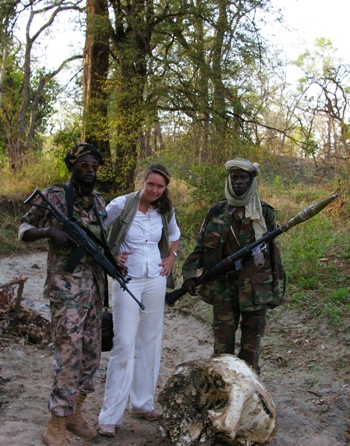

Vergniault overlooks carcass with soldiers for protection. Photo courtesy of Stephanie Vergniault.

"A lot of education should be done with locals to explain that elephants can produce income and that it is [the local’s] duty to alert the authorities when poachers are around," Vergniault says, but adds that saving Chad’s elephants is not just up to Chadians.
"At a greater level the International community should pressure all the states buying [ivory] to condemn it."
As highly-intelligent animals, Vergniault says that the elephants of Chad have not been left psychologically unscarred by the poaching war waged against them. In fact, the constant pursuit by armed killers—and tens-of-thousands of their own dead—have made the elephants of Chad increasingly aggressive, and even murderous.
"Elephants have a very good memory and, in my opinion, most of them are now survivors of a ‚holocaust‘. They have seen other elephants from their groups killed by humans and more and more they are taking their revenge and are becoming serial killers," Vergniault explains. "It is a pity! The remaining elephants of Chad are survivors and their only way to survive is to be very aggressive. For example, every time Chadians elephants see a horseman, they charge! Why? Because poachers are horsemen!"
Elephant poaching is on the rise globally, but in all the media covering the issue the massacred elephants of Chad have been largely ignored: Vergniault hopes to change this.
In a nation still considered unstable—where approximately 80 percent of the population lives below the poverty line and hundreds-of-thousands of refugees have arrived to escape violence in Darfur—saving elephants may appear unimportant next to the scale of human tragedy. Yet, if one is to hope for the future of Chad, and of central Africa in general, one has to believe that species like the elephant can survive the current onslaught—just as one hopes the people will weather the long storm—and continue to inhabit a region where they have roamed for millions of years.
To keep up on the work of SOS Elephants join the Facebook page which sends out regular updates: SOS Elephants Facebook Group.
Questions for Stephanie Vergniault or offers of help? Please feel free to contact her: svergniaul@aol.com
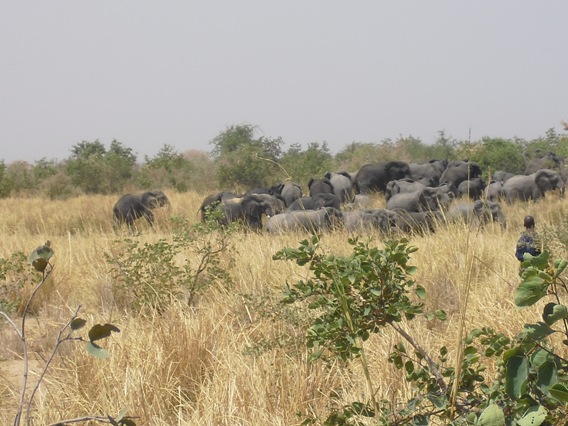
A herd of elephants roaming free in Chad. Photo courtesy of Stephanie Vergniault.
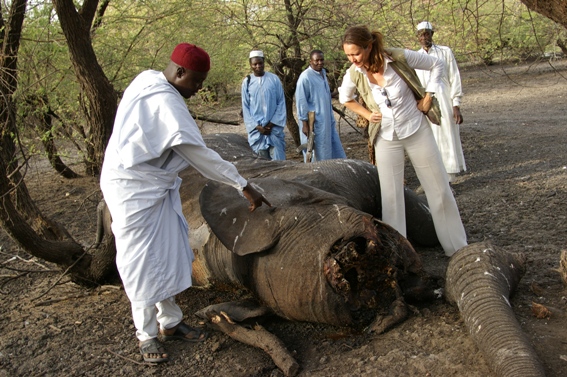
Vergniault inspects an ‚average‘ poaching. Photo courtesy of Stephanie Vergniault.
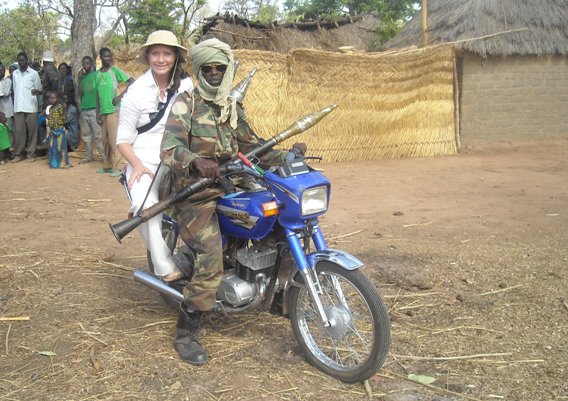
Vergniault rides with a soldier for protection. Photo courtesy of Stephanie Vergniault.
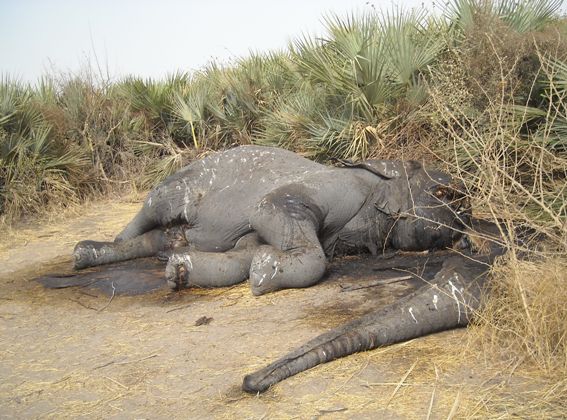
Poached elephant with trunk cut off. Photo courtesy of Stephanie Vergniault.
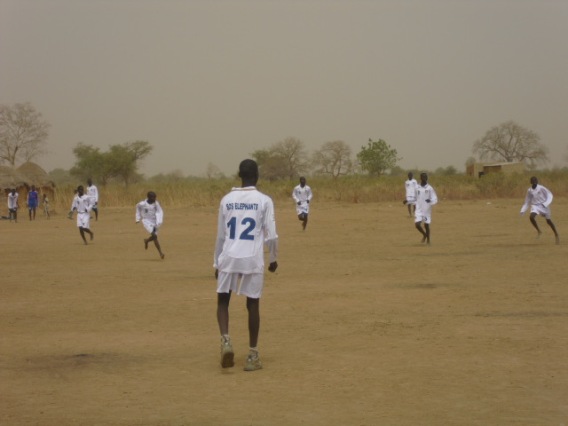
SOS Elephants works closely with local communities. Here they have sponsored a local football team. Photo courtesy of Stephanie Vergniault.
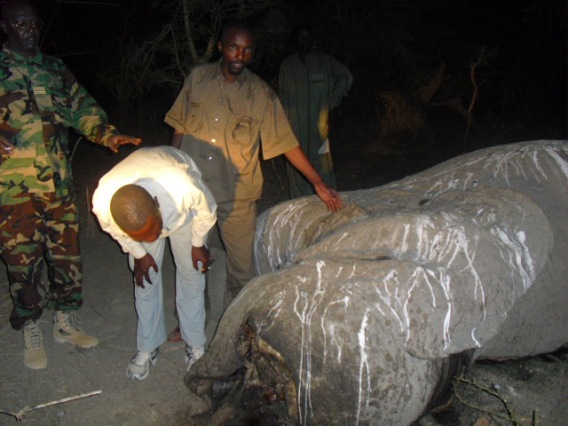
Poached elephant with its head cut off. Photo courtesy of Stephanie Vergniault.
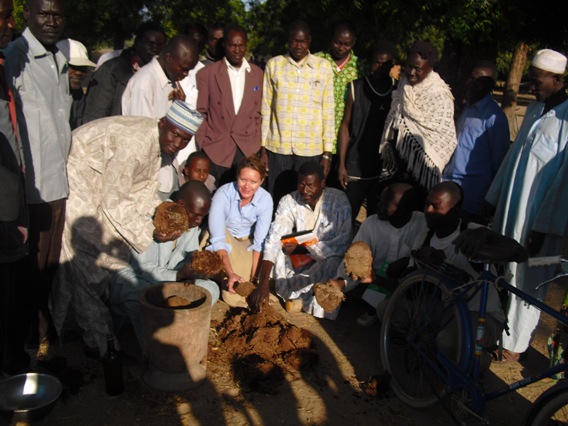
Vergniault working with locals. Photo courtesy of Stephanie Vergniault.
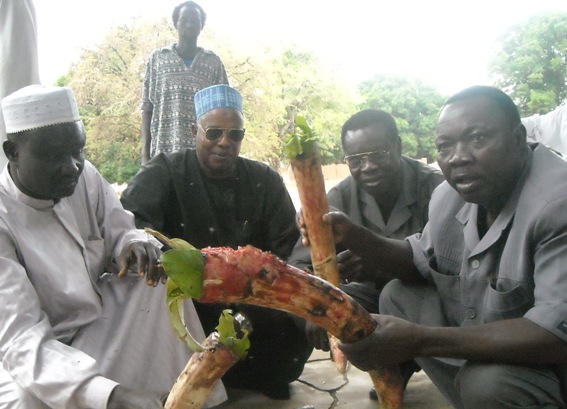
Officials hold up confiscated ivory. Photo courtesy of Stephanie Vergniault.
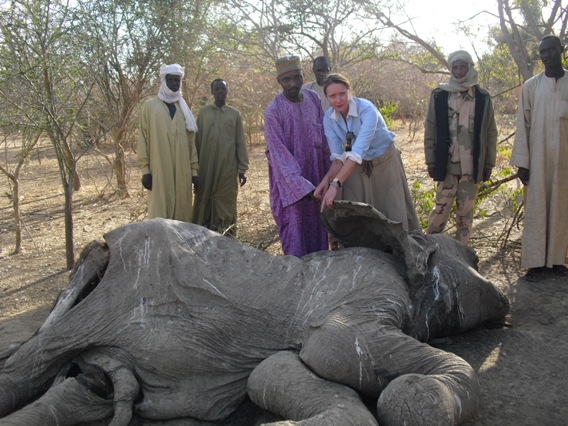
Vergniault examines a poached elephant. Photo courtesy of Stephanie Vergniault.

Source: http://news.mongabay.com/2010/0512-hance_chad.html

Unser  Partnerverein “Verein der Elefantenfreunde“ aus der Schweiz unterstützt Stephanie Vergniault! Our Friends from Switzerland-´s NGO “Verein der Elefantenfreunde“ are supporting Stephanie in Chad!
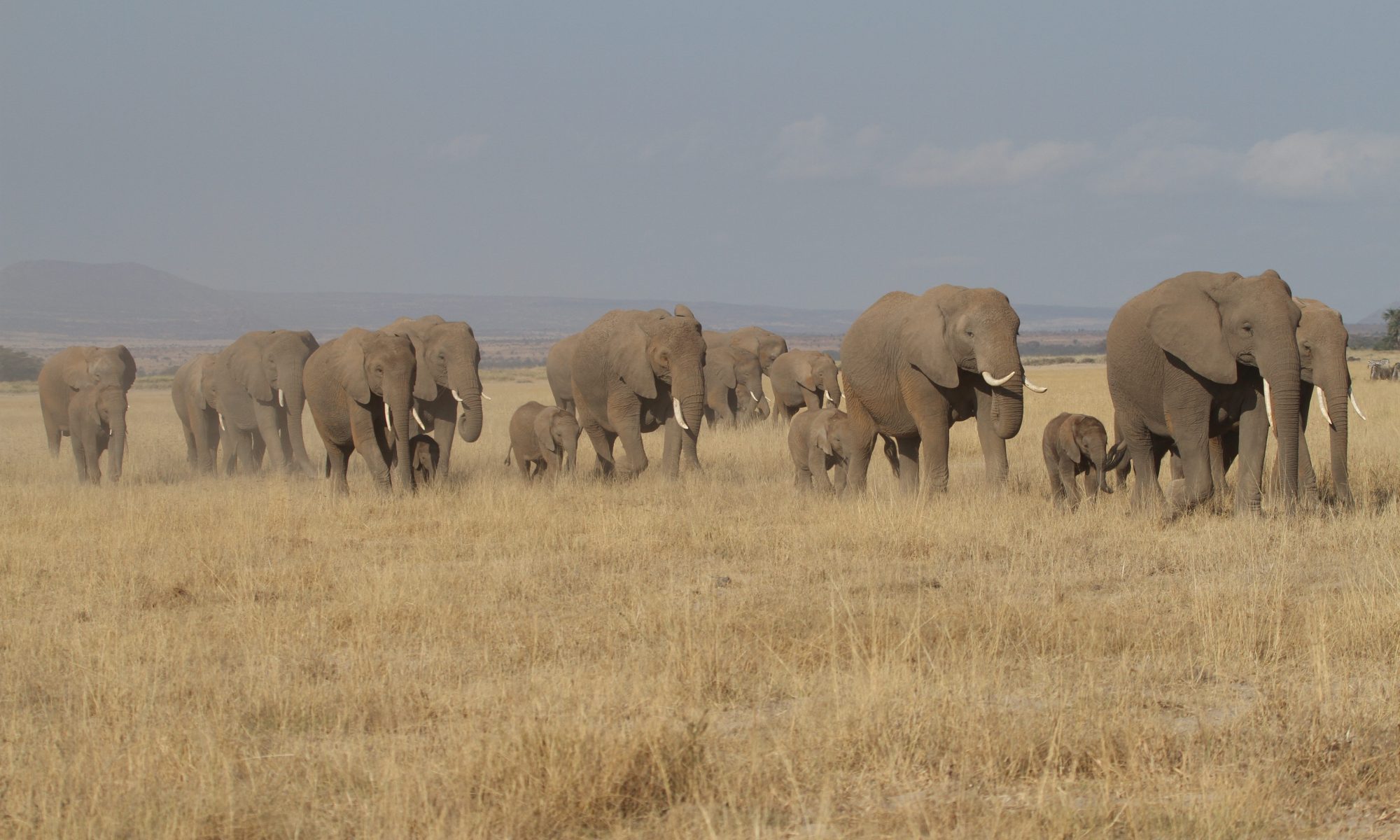

Africa’s vanishing wild: mammal populations cut in half

An interview with Ian Craigie.

The big mammals for which Africa is so famous are vanishing in staggering numbers. According to a study published last year: Africa’s large mammal populations have dropped by 59% in just 40 years. But what is even more alarming was that the study only looked at mammal populations residing in parks and wildlife areas, i.e. lands that are, at least on paper, under governmental protection. Surveying 78 protected areas for 69 species, the study included global favorites such as the African elephant, giraffes, zebra, wildebeest, and even Africa’s feline king, the lion.
"We weren’t surprised that populations had dropped but we were surprised by how large the drops had been," lead author Ian Craigie told mongabay.com in an interview.


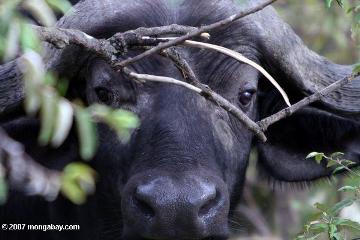
African buffalo in Maasai Mara park in Kenya. Photo by: Rhett A. Butler.

Craigie says that there are a number of causes behind the observed declines, including agriculture, hunting, and the bushmeat trade. But all of them are due to human actions. In fact, he points to Africa’s population explosion as one of the underlying factors.
"In Africa man has successfully lived alongside large populations of wild animals for millennia but the advent of advanced technology and agriculture has lead to a 5-fold increase in African human populations since World War 2. All these extra humans are using and moving into previously natural habitats and squeezing out the wildlife," he says.
The study looked at three general regions across Africa: Southern African, East Africa, and West Africa. Wildlife in Southern African parks fared the best according to Craigie because "the level of funding for parks in Southern Africa is much greater than other regions" and the region has lower population densities. West Africa’s parks came in last due to a culture of bushmeat hunting, poverty, and booming human populations.
The overall decline of African mammals is likely to be worse than even the study portrays for two reasons: mammal populations have almost certainly suffered worse outside of parks than inside, and Craigie and his team were not able to include parks that didn’t regularly survey their wildlife populations.


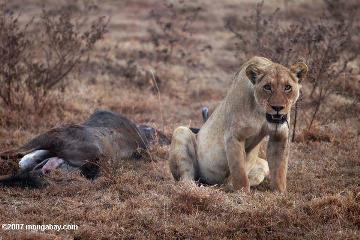
Lioness with wildebeest kill in Tanzania. Photo by: Rhett A. Butler.

"The parks left out of this study, where animals were not counted, are likely to be those which are financially poorer or less well managed. So the large declines we found were from the best parks, if we were able to include the other parks the results may have been even worse," Craigie explains.
In a January 2011 interview Dr. Ian Craigie discussed the state of mammal populations in parks across Africa, and how this loss impacts both the native ecosystems and the African people.
INTERVIEW WITH IAN CRAIGIE
Mongabay: What is your background?
Ian Craigie: I have just completed my PhD at the University of Cambridge and Institute of Zoology, London. I started the PhD having previously done a Masters at Imperial College London in 2006 and working for South African National Parks in 2004/2005.
AFRICAN MAMMAL DECLINES
Mongabay: Your study found that on average large mammal populations have dropped by 59 percent in Africa’s protected areas. Were you surprised by these findings?


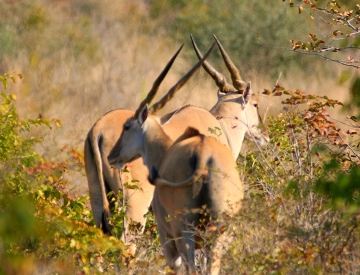
Common eland in Zimbabwe. Photo by: Tiffany Roufs.

Ian Craigie:We weren’t surprised that populations had dropped but we were surprised by how large the drops had been and how consistent the drops were.
Mongabay: Why do you think this might even underestimate total declines?
Ian Craigie:We were only able to obtain data from parks that count their animals regularly. The parks left out of this study, where animals were not counted, are likely to be those which are financially poorer or less well managed. So the large declines we found were from the best parks, if we were able to include the other parks the results may have been even worse.
Mongabay: How could these declines be affecting the overall ecosystem?
Ian Craigie:The declines we found were mostly in herbivores such as wildebeest and impala. These species modify their environment through grazing which is an essential process in the ecosystem. Grazing drives the nutrient cycle, it controls the number and severity of fires and it even dictates whether habitats are grassland or woodland. Large declines in the number of grazers can lead to substantial changes in biodiversity and habitat structure.
Mongabay: Even though there’s not enough data to do a similar study of mammal populations outside of protected areas, what’s your sense of how mammals are doing there?


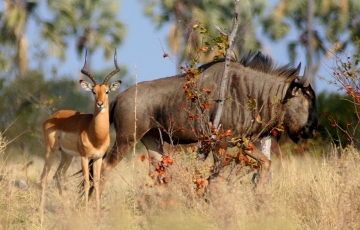
Wildebeest and a male impala in the Okavango Delta in Botswana. Photo by: Tiffany Roufs.

Ian Craigie:It is hard to get a good feel of what’s happening outside parks but anecdotally many of the species we looked at are now virtually absent from areas outside parks. If you were to go on a safari holiday today you wouldn’t expect to see significant numbers of wildlife on your journey to the park until you reached the park gates.
CAUSES
Mongabay: What are the likely causes behind this decline?
Ian Craigie:There are multiple causes but they are all ultimately driven by mankind. Hunting and habitat damage through agricultural expansion are the two main culprits.
Mongabay: What role do you think population growth could be playing in the decline?
Ian Craigie:Human population growth underlies these declines by increasing the pressure that mankind puts on the environment. In Africa man has successfully lived alongside large populations of wild animals for millennia but the advent of advanced technology and agriculture has lead to a 5-fold increase in African human populations since WW2. All these extra humans are using and moving into previously natural habitats and squeezing out the wildlife.
Mongabay: Is there any evidence of climate change impacting mammals negatively, for example, with the extended drought in Kenya last year?


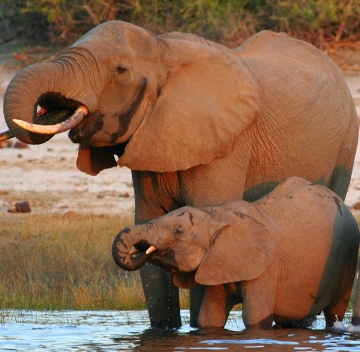
Elephants at the Chobe River in Botswana. Photo by: Tiffany Roufs.

Ian Craigie:It is highly unlikely that climate change has affected these animal populations. The declines we have observed go back 40 years and climate change has only very recently started to have a notable effect. Climate change is likely to affect these animal populations in the future by altering rainfall patterns in unpredictable ways, and causing droughts like the one you mentioned.
GOING FORWARD
Mongabay: Southern African mammals are doing better than East and West African. What is southern Africa doing right?
Ian Craigie:The level of funding for parks in Southern Africa is much greater than other regions of the continent and also there are generally lower human population densities.
Mongabay: West African mammals are the worse off of the three regions. What particular issues are mammals in West Africa facing?
Ian Craigie:West Africa still has a strong tradition of hunting for bushmeat, generally the countries in the region are poorer than the average for Africa and there are also high human population densities putting extra pressure on the natural resources.
Mongabay: What suggestions would you make in countering this decline or should we resign ourselves to a less wild Africa?
Ian Craigie:There is no doubt the patterns we have shown here can be reversed, the wildlife populations can recover if we reduce the threats they are facing, however it will require some serious investment and political will to achieve.
Mongabay: How would you like policymakers to view your study?


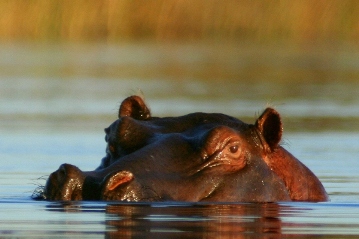
Hippos in the Okavango Delta in Botswana. Photo by: Tiffany Roufs.

Ian Craigie:I would like policymakers to recognise the importance of monitoring conservation efforts, my study shows that parks aren’t working as well as we’d like. Policymakers should recognise the need to improve the performance of current conservation actions to get the best return for their investments
Mongabay: Why should the average African care about mammal populations falling?
Ian Craigie:Maintaining wildlife populations is important for maintaining tourist spending which is a major source of income for a number of African countries. The large mammal populations also perform a number of important natural functions and if these become disrupted it is hard to predict how the ecosystems will react. If ecosystems become disturbed this will in turn disrupt ecosystem services such as pollination or clean water provision which may directly affect local human populations.
Mongabay: What do your findings say about the capacity of protected areas worldwide to preserve biodiversity?
Ian Craigie:It is hard to generalise these results to other parts of the world, Africa is special in having large areas of savannah with millions of large mammals roaming around. In other areas that are forested or mountainous or have very different species there are likely to be quite different patterns of threats and species responses, and so parks are likely to vary in their performance a great deal.

Source: http://news.mongabay.com/2011/0127-hance_craigie.html