Nairobi — A 47-year-old telecommunications engineer died on Tuesday night in a freak accident when his car rammed an elephant at Nkunga forest on the Meru-Nanyuki road.
Mr Dalton Mwachenga, who was travelling from Uganda, hit the elephant that then fell on his car.
Imenti North police boss Joshua Lutukai said the incident occurred around 1am.
Highway officers, who were manning a roadblock near the forest, rushed to the scene but could not rescue the man as there was a herd of about 50 elephants hovering around the scene.
Mr Lutukai said there were many accidents in the area because of overgrown shrubs that reduced visibility on the 6km stretch.
A Polish businessman is suing a travel agency after he failed to find elephants to shoot whilst hunting in Zimbabwe.
Waldemar I. (name withheld under Polish law) from Bytow in the Pomerania region in northern Poland, had long dreamt of hunting elephants in the African bush. In a bid to fulfil his fantasy, he enlisted the help of hunting specialists Jaworski Jagreisen, a German-based firm that also organises trips in pursuit of Polish bison. The company organised a trip for Waldemar I. to Zimbabwe, and the huntsman was picked up in Harare by staff from the Mopani Safaris company. However, the adventure was not to be a success. “They took me to a terrain where there simply weren’t any elephants,“ he told the Rzeczpospolita daily. “The bagging of trophies was simply out of the question.“ The head of Jaworski Jagreisen was in court in Poznan on Tuesday, where he argued that “the terrain is difficult and hilly, but elephants are present.“ “From what I know, Waldemar I. would have seen their dung,“ he added. The case has been adjourned until 15 February. The plaintiff is hoping to secure 32,000 zl (8,000 euros) from the company to cover his safari costs. (nh)
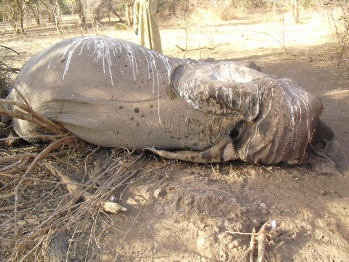
Chad’s few remaining elephants are "survivors of a ‚holocaust’". [warning: graphic images of killed elephants]
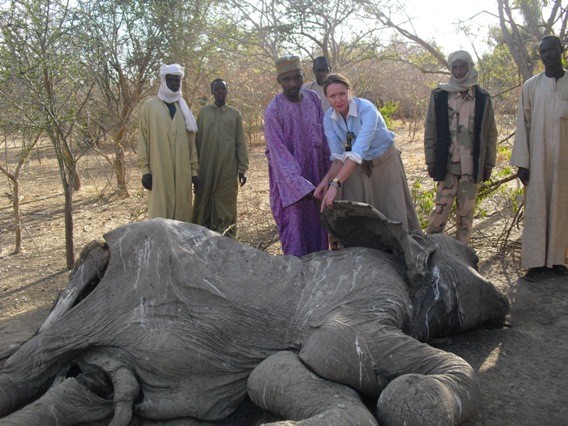
Stephanie Vergniault, head of SOS Elephants in Chad, says she has seen more beheaded corpses of elephants in her life than living animals. In the central African nation, against the backdrop of a vast human tragedy—poverty, hunger, violence, and hundreds of thousands of refugees—elephants are quietly vanishing at an astounding rate. One-by-one they fall to well-organized, well-funded, and heavily-armed poaching militias. Soon Stephanie Vergniault believes there may be no elephants left. A lawyer, screenwriter, and conservationist, Vergniault is a true Renaissance-woman. She first came to Chad to work with the government on electoral assistance, but in 2009 after seeing the dire situation of the nation’s elephants she created SOS Elephants, an organization determined to save these animals from local extinction. As a writer Vergniault is also working on a screenplay related to the ivory trade in Chad and elsewhere in Africa.
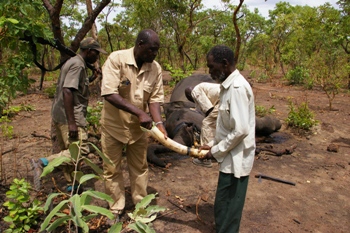
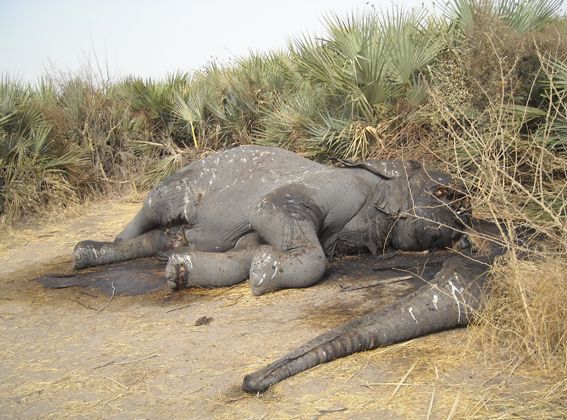
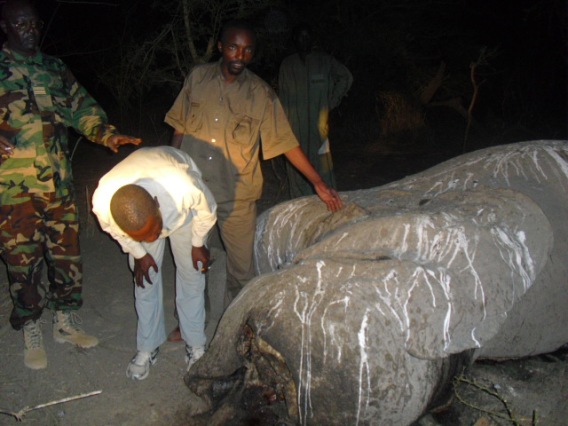
Poached elephant: poachers cut off the trunk and sometimes the head to get at the ivory tusks. Photo courtesy of Stephanie Vergniault.
"The population of Chadian elephants was around 20,000 in the 1980s, but due to the intensive poaching, it was reduced to a little more than 3,000 today," Vergniault recently told mongabay.com, illustrating a total decline of 85 percent in less than three decades. And that number keeps falling: 105 elephants were killed by poaching in the region of Logon Oriental during the month of April alone. According to Vergniault if poaching continues at this rate not a single elephant will be alive in Chad in three years time. SOS Elephants is working desperately to establish ways to stop poaching in Chad, yet they face off against poachers who are highly-trained and well-compensated soldiers-of-fortune with access to sophisticated technology, not simple locals driven to kill elephants out of desperate poverty. "I doubt [the poachers] are living in Chad," Vergniault says. "They have a kind of Arabic nomadic style: traveling by horses divided into small groups of 5, sometimes with camels to carry the ivory. They are apparently former soldiers, since they are very well trained when shooting." Vergniault says that she believes the poachers have their main base in the Central African Republic, and are likely operating both in Chad and Cameroon. These poachers are also equipped with the latest in technological advances, including GPS and satellite phones. They may even be employing satellite imagery to locate and follow elephant herds.
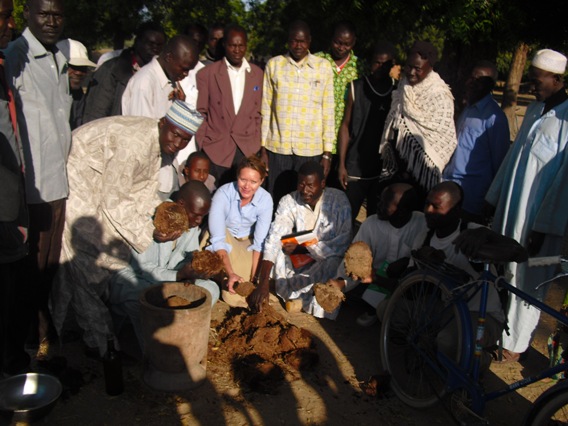
Vergniault works with locals. Photo courtesy of Stephanie Vergniault.
"Due to certain sources that I cannot for the moment reveal, we are really wondering if they are not using satellite pictures to localize the groups of elephants," Vergniault explains. "It is very important for us to understand how the traffic is organized abroad and if the ‚guys‘ behind the traffic have very sophisticated ways to operate and are able guide the poachers due to very high satellite picture, perhaps even military quality?" Who is ultimately organizing and paying these militia-poachers no one knows. However, the ivory does not stay in Africa, but most likely ends up in far-away China, a nation known for a rich market of illegal wildlife goods. The only way for SOS Elephants to even begin combating such determined poaching is by working closely with locals and the Chadian government. "We are slowly establishing a very good network of local informers who have been taught by us to give us the position of poachers or elephants. Due to our very good relationships with the Chadian authorities, we are alerting the Mobile Forces of Protection of the Environment and sometimes even the Head of State to ask him to send troops whenever it is necessary," Vergniault says, adding that the Head of State of Chad, Idriss Deby Itno, has become a heroic ally in the war to save the nation’s elephants.
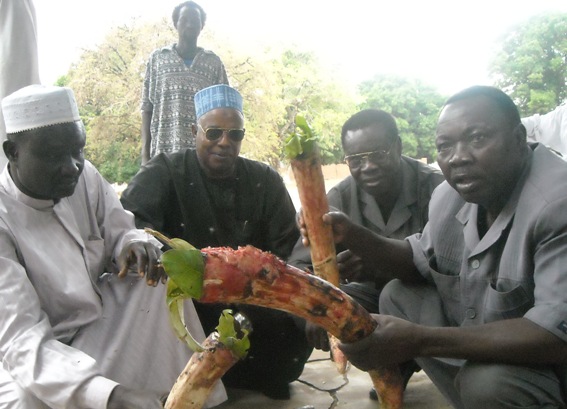
Officials seize ivory with killed elephant in the background. Photo courtesy of Stephanie Vergniault.
The government, Vergniault stresses, has been incredibly helpful. In fact, it’s not only elephants that are losing their lives to poachers‘ ammunition, but Chadian soldiers as well. Last month poachers killed two Chadian soldiers in a single weekend. The elephant wars are a human tragedy just as much as a wildlife one. Along those lines, SOS Elephants is not content to only work on the poaching issue, but is also helping locals protect their fields from hungry elephant. "Because we need to enhance the quality of the relationships between elephants and farmers, our second kind of activities is to teach the people how to better protect their crops," says Vergniault, who has worked with farmers to employ red pepper as elephant-repellent, including planting red pepper around their fields. Historically, Chad’s elephants have migrated both to Cameroon and the Central African Republic using the same corridors for centuries, but recently farmers have moved into many of these corridors planting crops, which has brought sensitive elephants and humans closer together. SOS Elephants is also working with authorities on plans to move people out of the elephant corridors.
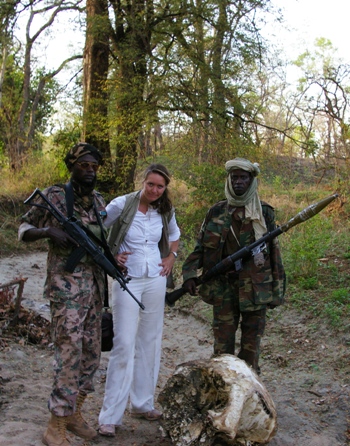
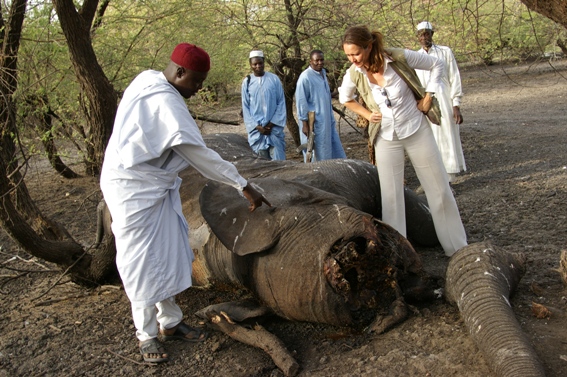
Vergniault overlooks carcass with soldiers for protection. Photo courtesy of Stephanie Vergniault.
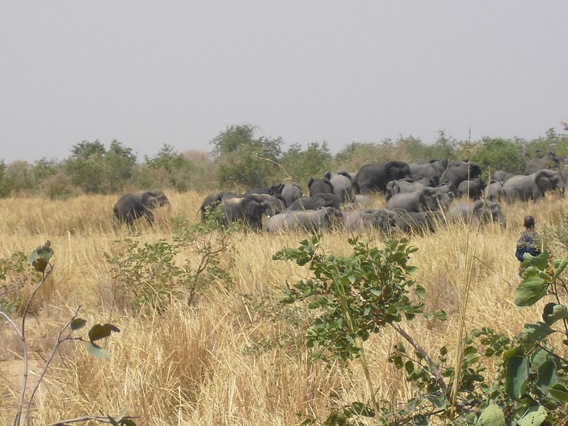
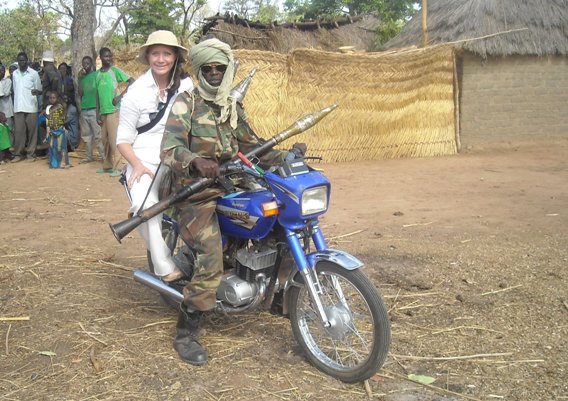
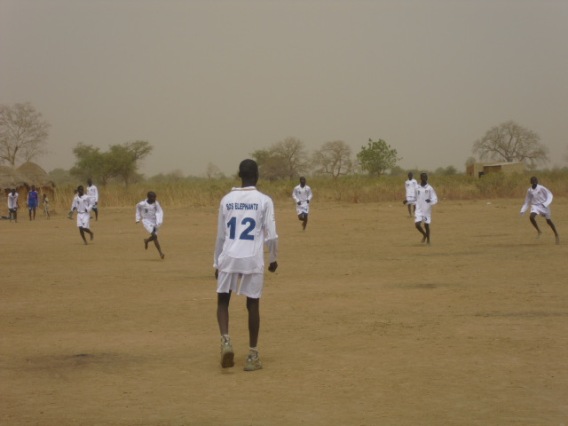
"A lot of education should be done with locals to explain that elephants can produce income and that it is [the local’s] duty to alert the authorities when poachers are around," Vergniault says, but adds that saving Chad’s elephants is not just up to Chadians. "At a greater level the International community should pressure all the states buying [ivory] to condemn it." As highly-intelligent animals, Vergniault says that the elephants of Chad have not been left psychologically unscarred by the poaching war waged against them. In fact, the constant pursuit by armed killers—and tens-of-thousands of their own dead—have made the elephants of Chad increasingly aggressive, and even murderous. "Elephants have a very good memory and, in my opinion, most of them are now survivors of a ‚holocaust‘. They have seen other elephants from their groups killed by humans and more and more they are taking their revenge and are becoming serial killers," Vergniault explains. "It is a pity! The remaining elephants of Chad are survivors and their only way to survive is to be very aggressive. For example, every time Chadians elephants see a horseman, they charge! Why? Because poachers are horsemen!" Elephant poaching is on the rise globally, but in all the media covering the issue the massacred elephants of Chad have been largely ignored: Vergniault hopes to change this. In a nation still considered unstable—where approximately 80 percent of the population lives below the poverty line and hundreds-of-thousands of refugees have arrived to escape violence in Darfur—saving elephants may appear unimportant next to the scale of human tragedy. Yet, if one is to hope for the future of Chad, and of central Africa in general, one has to believe that species like the elephant can survive the current onslaught—just as one hopes the people will weather the long storm—and continue to inhabit a region where they have roamed for millions of years. To keep up on the work of SOS Elephants join the Facebook page which sends out regular updates: SOS Elephants Facebook Group. Questions for Stephanie Vergniault or offers of help? Please feel free to contact her: svergniaul@aol.com A herd of elephants roaming free in Chad. Photo courtesy of Stephanie Vergniault. Vergniault inspects an ‚average‘ poaching. Photo courtesy of Stephanie Vergniault. Vergniault rides with a soldier for protection. Photo courtesy of Stephanie Vergniault. Poached elephant with trunk cut off. Photo courtesy of Stephanie Vergniault. SOS Elephants works closely with local communities. Here they have sponsored a local football team. Photo courtesy of Stephanie Vergniault. Poached elephant with its head cut off. Photo courtesy of Stephanie Vergniault. Vergniault working with locals. Photo courtesy of Stephanie Vergniault. Officials hold up confiscated ivory. Photo courtesy of Stephanie Vergniault. Vergniault examines a poached elephant. Photo courtesy of Stephanie Vergniault.
Unser Partnerverein “Verein der Elefantenfreunde“ aus der Schweiz unterstützt Stephanie Vergniault! Our Friends from Switzerland-´s NGO “Verein der Elefantenfreunde“ are supporting Stephanie in Chad!
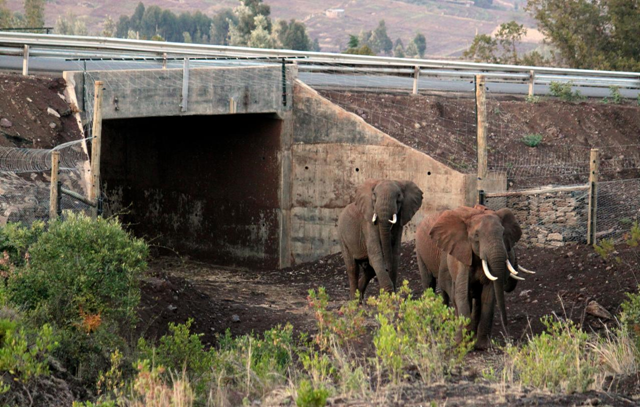
In this photo of Monday, Jan. 24, 2011, elephants exit Africa’s first dedicated elephant underpass near the slopes of Mt. Kenya. Conservationists say the tunnel connects two elephant habitats that had been cut off from each other for years by human development. (AP Photo/Jason Straziuso)
Dusk had settled on Mount Kenya’s forested slopes, and traffic had slowed to a trickle on the region’s major highway. That’s when three elephants crossed through Africa’s first dedicated elephant underpass — a new solution to the increasing problem of animal-human conflict in Africa.
It was 6:47 p.m. when a gleaming set of white tusks poked through the end of the newly built underpass. A second set of tusks appeared. Then a third. Moving cautiously, the three young males climbed a bank of dirt, made a sharp left turn and crashed into the forest.
The $250,000 tunnel — built with donor funds — has successfully connected two wilderness areas and two distinct elephant populations separated for years by human development. The elephants successfully crossed a major road without putting themselves or motorists in danger, and without damaging crops or scaring residents in a nearby village.
"The first time we had a report about an elephant going under the underpass it was very exciting. We didn’t expect it to happen so quickly," said Susie Weeks, executive officer of the Mount Kenya Trust, one of the partners in the tunnel project. "They actually managed to go through it within days of it being opened."
The 15-foot-high (4.5-meter-high) tunnel opened for elephant business around Christmas, and on Jan. 1 a bull elephant named Tony made the first crossing. Accompanied by two other young males, Tony moved through the underpass again on Monday as an Associated Press reporter captured the first ever photos and video of elephants making use of the underpass.
Africa’s wildlife is coming under increasing pressure from human development. Villages are being built and crops raised in areas that for centuries were animal wildlands. The new elephant underpass reconnected wilderness areas on Mount Kenya’s highlands and the lower forests and plains, linking 2,000 elephants on Mt. Kenya with 5,000 more below.
Iain Douglas-Hamilton, the founder of Save The Elephants, said the 9-mile (14-kilometer) man-made corridor that surrounds the tunnel allows elephants to move from low to high to search for food and mates. The fenced-in corridor will also help strengthen the elephants‘ gene pool. The overall corridor and tunnel project cost $1 million.
"All over Africa this incredible wildlife is increasingly being fragmented by the growing human population, and if African wildlife is to survive, solutions must be found of this nature, where connectivity is preserved through corridors," he said.
"I think it’s a good example of the compromises that can be made between human interest and the survival of wild animals," he added.
The underpass is somewhat pricey, Douglas-Hamilton said. Cheaper solutions will also need to be found, including points where traffic will be stopped so elephants can cross the road, he said.
Kenya’s elephant underpass may be the first in Africa but not the world. China and India have elephant underpasses, and India even has elephant overpasses. In the U.S., a winner was announced Sunday in a contest to design a highway wildlife crossing in Vail, Colorado aimed at reducing collisions between cars and deer, coyote and bighorn sheep.
In South Africa’s Addo Elephant National Park, which is fragmented by roads and railway lines, officials recently opened an elephant crossing over a road, said Megan Taplin, a park spokeswoman. She said officials have considered overhead bridges that are wide and full of vegetation to help elephants move around.
Kenya’s underpass was 10 years in the making, and didn’t gather much momentum until Richard Branson, owner of Virgin Atlantic, donated $250,000. The Dutch government kicked in more money and other donors stepped up. Two major farms allowed the corridor to cross through their land.
One of those family farms gave up 671 acres to the corridor. The elephants have already caused $25,000 in damage, but farm owner-manager Charlie Dyer said he is "just overjoyed and really, really satisfied" to see the underpass in use.
The project had many skeptics, people who feared the elephants wouldn’t walk through a tunnel that humans had built.
"So many people were wondering, are we putting good money into this?" said Weeks. But so far about three dozen elephants passes have been made, providing conservationists with the answer they were hoping for.
The tunnel sits in the rolling hills below Mount Kenya, near fields of young green wheat and bright yellow canola stalks. It was lined with hay and elephant dung to entice the animals through. The bucolic lands can be dangerous, though.
Poaching is on the upswing, fueled by demand for ivory in China. John Pameri, the senior warden at the Lewa Wildlife Conservancy, one of the partners in the underpass project, said poachers killed more than 30 elephants in northern Kenya in December. Because elephant tusks have increased in value, poaching is "really a big, big danger," Pameri said.
Save the Elephants has put GPS collars on several elephants and can track their movements. Three minutes after Tony crossed through the tunnel Monday, an automatic text message alert went out to people like Weeks and Douglas-Hamilton, who has since watched Tony climb to the top of the elephant corridor on a Save The Elephants Google Earth maps program.
"This particular corridor is almost a symbol. It’s a very high profile one under the peaks of Mount Kenya, and what happens there is important for Kenya and for Africa in terms of conservancy of elephants and biodiversity," Douglas-Hamilton said.